Translate

Wednesday, 21 May 2014

Check out the new DataCore Labs and Catching the Software-Defined Storage Wave

New  http://www.datacorelabs.com/  web site!

Catching the Software-Defined Storage Wave

    • 6 days ago
    •  
    • 32 views
    Dealing with data storage pain points? Join our technical expert, Jeff Slapp, and learn why a true Software-Defined Storage solution is ideal for improving application performance, managing diversi... 

Best Practices for Creating Highly Available Architectures

    • 2 weeks ago
    •  
    • 44 views
    Got High Availability for data storage? Join DataCore LABS and Tim Warden, Senior Solutions Architect at DataCore Software, as he discusses and presents his findings from years in the field on how ... 

Pain Meds for Data Migration Headaches

    • 3 weeks ago
    •  
    • 14 views
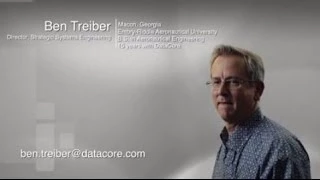
    Ben Treiber, Director of Strategic Systems Engineering at DataCore Software, brings over 15 years of experience helping customers migrate data. Ben is an expert at solving some of the toughest data... 

Flash - The Inside Story

    • 1 month ago
    •  
    • 118 views
    Got flash? Join DataCore LABS and Dr. Jon Toigo noted Data Scientist, Author, and Researcher, as he reviews the strategic long term outlook for deployment of Flash and SSD technologies. During this... 

Pain Meds for Data Migration Headaches

    • 1 month ago
    •  
    • 137 views
    Ben Treiber, Director of Strategic Systems Engineering at DataCore Software, brings over 15 years of experience helping customers migrate data. Ben is an expert at solving some of the toughest data... 

Why All the Buzz Around Software Defined Storage?

    • 3 months ago
    •  
    • 112 views
    Paul Murphy explains why the idea of software-defined storage has picked up steam in the storage industry and how DataCore delivers 

Friday, 16 May 2014

Storage is in the midst of disruption. Which side are you on?

Where should your data storage be placed: inside the server or out on the storage area network (SAN)?

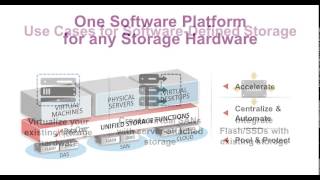
DataCore recently announced SANsymphony-V10, the company’s 10th generation software platform deployed at over 10,000 customer sites around the world. The key problem that we looked to addressed in this release was not fully covered in the press which tends to focus on specific features. Instead, the main aim of this release was to deal with the problem of separate and isolated storage islands caused by the incompatibilities of different storage vendor offerings and the use of Flash which has re-driven the need for server-side storage. This and the diversity of new technologies has disrupted the storage market. Today, the storage world consists of a spectrum of storage approaches and devices and what is needed is unification and common management that can work across different vendor platforms and technologies. This is one of the key challenges that true software-defined storage architectures must resolve.

What is needed is a solution that transcends across all the different platforms? A platform that provides end-to-end storage services which can reconcile Virtual SANs, Converged Appliances, Flash Devices, Physical SANs, Networked and Cloud Storage from Becoming ‘Isolated Storage Islands’.

IDC's Nick Sundby states the problem in the following release as follows:

“It’s easy to see how IT organizations responding to specific projects could find themselves with several disjointed software stacks – one for virtual SANs for each server hypervisor and another set of stacks from each of their flash suppliers, which further complicates the handful of embedded stacks in each of their SAN arrays,” said IDC’s consulting director for storage, Nick Sundby. “DataCore treats each of these scenarios as use cases under its one, unifying software-defined storage platform, aiming to drive management and functional convergence across the enterprise.” 


Flash and new storage technologies are driving a ‘Rethink’ on how we deal with storage and its growth and diversity; storage is no longer just mechanical disk drives, it now encompasses a range of devices from Flash-memory to, Virtual SANs, to SANs to Cloud Storage.


The following article overviews how DataCore is tackling the issue of 'isolated storage islands':

But, let’s examine further the issue of data storage placement which with the advent of Flash technologies has become a major question.

DataCore's Augie Gonzalez recently wrote an interesting piece ‘Which side are you on?’ , which covers the trade-offs of server-side or SAN-side, the article appears below:

Augie asks us to considers both sides of the storage placement argument and concludes that maybe we don't have to take sides at all.
There is a debate raging as to where data storage should be placed: inside the server or out on the storage area network (SAN). The split between the opposing views of the network grows wider each day. The controversy has raised concerns among the big storage manufacturers, and will certainly have huge ripple effects on how you provision capacity going forward.

DAS BACK IN THE LIMELIGHT 
25 years ago, SANs were a novelty. Disks primarily came bundled in application servers - what we call Direct Attached Storage (DAS) - reserved to each host. Organizations purchased the whole kit from their favorite server vendor. DAS configurations prospered but for two shortcomings; one with financial implications and the other affecting operations.

First, you'd find server farms with a large number of machines depleted of internal disk space, while the ones next to them had excess. We lacked a fair way to distribute available capacity where it was urgently required. Organizations ended up buying more disks for the exhausted systems, despite the surplus tied up in the adjacent racks.

The second problem with DAS surfaced with clustered machines, especially after server visualization made virtual machines (VMs) mobile. In clusters of VMs, multiple physical servers must access the same logical drives in order to rapidly take over for each other should one server fail or get bogged down.

SANs offer a very appealing alternative - one collection of disks, packaged in a convenient peripheral cabinet where multiple servers in a cluster can share common access. The SAN crusade stimulated huge growth across all the major independent storage hardware manufacturers including EMC, NetApp and HDS and it also spawned numerous others. Might shareholders be wondering how their fortunes will be impacted if the pendulum swings back to DAS, and SANs fall out of favor?

Such speculation is fanned by the dissatisfaction with the performance of virtualized, mission-critical apps running off disks in the SAN, which lead directly to the rising popularity of flash cards (solid state memory) installed directly on the hosts.

HOST-SIDE VIEWPOINT
The host-side flash position seems pretty compelling; much like DAS did years ago before SANs took off. The concept is simple; keep the disks close to the applications and on the same server. Don't go out over the wire to access storage for fear that network latency will slow down I/O response.
The fans of SAN argue that private host storage wastes resources and it's better to centralize assets and make them readily share-able. Those defending host-resident storage contend that they can pool those resources just fine. Introduce host software to manage the global name space so they can get to all the storage regardless of which server it's attached to. Ever wondered how? You guessed it; over the network. Oh, but what about that wire latency? They'll counter that it only impacts the unusual case when the application and its data did not happen to be co-located.

Well, how about the copies being made to ensure that data isn't lost when a server goes down? You guessed right again: the replicas are made over the network.

What conclusion can we reach? The network is not the enemy; it is our friend. We just have to use it judiciously.

Now then, with data growth skyrocketing, should organizations buy larger servers capable of housing even more disks? Why not? Servers are inexpensive, and so are the drives. Should they then move their Terabytes of SAN data back into the servers?

Please see how DataCore is addressing the above issues with its latest release: DataCore SANsymphony-V10


Wednesday, 14 May 2014

DataCore SANsymphony V10 ups the ante in the storage virtualisation market

http://kusnetzky.net/analysts-take/sansymphony-10-ups-the-ante.html 
George Teixeira, CEO of DataCore and his colleague Augie Gonzalez, Director of Product Marketing, stopped by to discuss how the company has done since our last chat and to introduce version 10 of SANsymphony. They believe that this is the best software for flash storage, DRAM storage and all fashion of rotating media.

What does SANsymphony do?

SANsymphony is a storage virtualization (call it software defined storage if you prefer) product that executes on x86-64 servers, sits in the data path between applications and a huge selection of storage devices and offers significant performance improvements, better utilization of storage devices and significantly improves reliability through redundancy.
The software does this by offering the following capabilities:
  • Auto-tiering to automatically move data to the appropriate storage tier to optimize both performance and cost
  • Caching that is designed to optimize how data is stored and retrieved regardless of the type of storage device
  • Synchronization and Mirroring to assure that data is where it needs to be, when it needs to be there and is highly reliable as well
  • Thin provisioning that allows storage to be allocated as needed rather than provisioning the largest space an application is likely to need at some point in the future
  • and a long list of other features
Like all virtualization technology, the goal is creating an artificial, virtual view of storage that is different than what the physical storage hardware provides.

What's new with version 10?

DataCore has extended SANsympony's virtual SAN capabilities in a number of ways and describes the product in the following way:
The spotlight on SANsymphony-V10 is clearly on the new virtual SAN capabilities, and the new licensing and pricing choices. However, a number of other major performance and scalability enhancements appear in this version as well:
  • Scalability has doubled from 16 to 32 nodes; Enables Metro-wide N+1 grid data protection
  • Supports high-speed 40/56 GigE iSCSI; 16Gbps Fibre Channel; iSCSI Target NIC teaming
  • Performance visualization/Heat Map tools add insight into the behavior of Flash and disks
  • New auto-tiering settings optimize expensive resources (e.g., flash cards) in a pool
  • Intelligent disk rebalancing, dynamically redistributes load across available devices within a tier
  • Automated CPU load leveling and Flash optimizations to increase performance
  • Disk pool optimization and self-healing storage; Disk contents are automatically restored across the remaining storage in the pool; Enhancements to easily select and prioritize order of recovery
  • New self-tuning caching algorithms and optimizations for flash cards and SSDs
  • ‘Click-simple’ configuration wizards to rapidly set up different use cases (Virtual SAN; High-Availability SANs; NAS File Shares; etc.)

Snapshot analysis

I've spoken with a number of customers who use SANsymphony on a daily basis. If I told you exactly what they've said, you would believe this post was really a marketing message from DataCore in disguise. I often hear stories of huge performance improvements, significant improvements in storage utilization and much better storage reliability.
Although I'm sure that DataCore's competitors would disagree, Teixeria asserts that SANsymphony is "the ultimate storage stack that simply accelerates everything."
He also asserts that all DataCore needs to do is get people to try it and they're hooked. Although I'm usually very skeptical of such claims, after talking with DataCore's customers, I'm beginning to believe it is true.
There are a large number of suppliers in the storage and storage virtualization market. Players such as IBM, EMC, NetApp, HP, HDS and a growing list of other competitors offer products that appear similar. DataCore has to get ahead all of these large and small suppliers to get the ear of IT decision makers. If the company is able to break through all of the noise, the strengths of their product are likely to be convincing.

Tuesday, 13 May 2014

DataCore Creates Virtual SAN Out of Server Storage

http://www.itbusinessedge.com/blogs/it-unmasked/datacore-creates-virtual-san-out-of-server-storage.html

One of the benefits of using a storage management application is that the location of the actual storage device doesn’t matter all that much.

Unify and Federate Physical and Virtual SANs
Taking advantage of that benefit, DataCore’s release of SANsymphony-V10 has added a Virtual-SAN capability that turns all the Flash memory and magnetic storage attached to a server into a shared resource for the applications that access that server.

As of late, there has been a lot of interest in Flash storage on a server, and DataCore CEO George Teixeira notes that most of the Flash storage deployed today on a server is allocated to a single application. Teixeira says that this is a comparatively expensive way to solve an application performance issue because most of the time the Flash storage device is just sitting idle.

SANsymphony-V10 turns Flash and magnetic storage on the server into a resource that can be shared by a cluster of 32 servers, accessing up to 32PB of storage at speeds of up to 50 Million IOPS, says Teixeira.

DataCore is not the only vendor to have turned Flash memory into a shared resource. But Teixeira says the rise of Flash validates a software-defined approach to storage that allows IT organizations to mix and match third-party storage devices as they see fit.

Of course, DataCore would be the first to admit that most IT organizations have only a fraction of their data running in Flash memory. But the percentage of the data that does run in Flash tends to be really hot in terms of how often it needs to be accessed across what is usually a broad application portfolio.

Skyera's skyHawk All-Flash Array Certified as DataCore Ready; Industry Leading Price Performance Meets Software-Defined Storage

Leading All-Flash Storage Array Coupled with SANsymphony-V Dramatically Accelerates Application Performance Across Software-Defined Storage Architectures

"Not only is Skyera one of the leading players in the flash storage industry, but they have also revolutionized the industry by developing the only all-flash array to break the hard disk price barrier," said Carlos M. Carreras, vice president of alliances and business development at DataCore. "The skyHawk storage array combined with SANsymphony-V provides IT departments with a solution designed to virtualize any application, while dramatically increasing performance. We are pleased to partner with Skyera and welcome them into the DataCore Ready program."
"Skyera offers a uniquely scalable enterprise solid-state storage solution that eliminates storage performance bottlenecks and allows IT departments to virtualize their most demanding workloads," said Radoslav Danilak, CEO of Skyera. "In our effort to help usher in a new era of storage, we are committed to partnering with leading vendors to ensure the optimization of jointly deployed solutions that offer the ultimate efficiency, functionality and simplicity. As such, we are proud to have been accepted into the DataCore Ready program."

Monday, 5 May 2014

New flash-optimized DataCore SANsymphony-V10 release targets VMware VSAN

DataCore Software this week added flash optimization features to its SANsymphony-Vstorage virtualization software. With SANsymphony-V10, DataCore is ready to take on virtual SAN newcomer VMware.
DataCore SANsymphony-V performance and capacity capabilities have been increased, doubling the number of nodes supported from 16 to 32. It can pool up to 32 PB of capacity, scale to 50 million IOPS, and offers metro-wide N-plus 1 grid data protection.

DataCore said SANsymphony-V10 can now self-tune flash and minimize flash wear by allocating the right amount of flash to a specific workload. It also enables flash to be mirrored for high availability to non-flash devices, and its in-memory caching can speed application workloads and optimize write performance.
SANsymphony-V10 runs on x86 servers to create a shared storage pool out of internal flash and disk storage that are available to that server. It also includes plug-ins for VMware ESX and Microsoft Hyper-V hypervisors.
DataCore CEO George Teixeira said SANsymphony-V10 has much greater reach than VMware's recently announced Virtual SAN (VSAN) software, which also turns commodity hardware into shared storage.
"VMware VSAN works only with VMware vSphere and only in the host,"Teixeira said. "What I'm seeing is a world of isolated islands of storage. Each commercial vendor is driving divergent approaches and creating isolated storage islands."
Randy Kerns, a senior strategist at Evaluator Group, said DataCore brings a much more mature product offering in the virtual storage area network (SAN) space compared to other vendors' newer products.
"They have an interesting argument to make," Kerns said. "The product now can manageserver-side flash. It can manage direct-attached storage and SAN-attached storage. It gives you a virtual SAN with many different storage capabilities.
"One of the big things about DataCore is it has had a product offering since 1998 and they have a mature set of features," he continued. "DataCore has been competing with IBM's [SAN Volume Controller] SVC, but now they can compete with VMware VSAN."
…DataCore's Teixeira said SANsymphony-V10 supports any flash from vendors such as Fusion-io, Skyera, Toshiba OCZ, Pure Storage and Violin Memory. The DataCore SANsymphony-V software automatically assigns either flash or lower-cost devices to each workload, depending on its needs.
"Only 5% to 10% of workloads need high-speed flash," Teixeira said. "The software has to be smart enough to see that a database needs flash. Vendors want people to think flash is the great panacea that solves all problems, but it has to coexist with the existing storage."
DataCore offers license packages targeted for different use cases. One license model is priced at $4,000 per server.
"Just add one instance of each server and you're golden," Teixeira said. "You have a vSAN federated with traditional storage."
Multinode DataCore SANsymphony-V10 licenses start in the $10,000 to $30,000 range. DataCore is also offering a virtual SAN package at $4,400 per server that includes auto-tiering, adaptive read-write caching from DRAM, storage pooling, synchronous mirroring, thin provisioning and snapshots. SANsymphony-V10 is scheduled to be generally available May 30.

Thursday, 1 May 2014

DataCore SANsymphony Boosts Flash, Ends ‘Storage Islands’

http://www.enterprisetech.com/2014/04/30/datacore-sansymphony-boosts-flash-ends-storage-islands/

Software-defined storage vendor DataCore Software rolled out the latest version of its SANsymphony virtual storage area network, which seeks to boost utilization of pricey flash storage technology while pulling together virtual and physical storage services.

DataCore said that version 10 of its virtual SAN software addresses the need to boost utilization of flash storage by directly attaching flash and disk storage to application hosts and clustered servers in a virtual SAN.

In an interview, DataCore CEO and co-founder George Teixeira said the latest version of its virtual SAN software reflects a trend toward moving workloads closer to applications and storage closer to workloads. The added value resides in DataCore’s software stack, which also optimizes flash utilization while preventing virtual and physical services from becoming “isolated storage islands.”

“The software should be able to move across all these environments,” Teixeira added. That’s particularly important as enterprise customers adopt a spectrum of storage options that include flash, storage networks along with private and public clouds.

With that in mind, DataCore said the latest version of its SAN software incorporates an automation feature called “auto-tiering” that allows different flash memory and storage devices to operate across different vendor platforms. The feature can handle up to 15 tiers and is designed to automate the process of identifying the appropriate storage platform within an enterprise, the company claimed.

The automation software also selects the appropriate level of storage depending on the use case. For example, the storage of medical records would require greater security while less sensitive data could be stored at various physical locations using I/O mirroring over metro-area distances.

Teixeira added that flexibility is the key factor driving the shift to software-defined networks. Unlike hardware, which tends to be replaced every several years, “software lives on,” the DataCore CEO noted, and must be able to run on a variety of environments.

The company said version 10 of its virtual SAN software scales performance up to 50 million IOPS and 32 petabytes of capacity across a 32-server cluster.

DataCore said typical multi-node licenses for version 10 of its SANsymphony software range between $10,000 and $25,000. New virtual SAN pricing starts at $4,000 per server. The virtual SAN price includes the auto-tiering feature along with adaptive read/write caching form DRAM, storage pooling, metro-wide synchronous mirroring and thin provisioning, among other features.

The company added that the new virtual SAN software supports operating systems hosted on VMware ESX and Microsoft Hyper-V virtual environments. SANsymphony Version 10 can also be deployed in a virtual machine or running in native mode on Windows Server 2012 using physical X86 servers.

The company said general availability of version 10 is scheduled for May 30, 2014.

Wednesday, 30 April 2014

ZDnet: Snapshot Analysis on Software-defined Storage, DataCore style

By Dan Kusnetzky for Virtually Speaking --Read the full ZDNET article at: http://www.zdnet.com/software-defined-storage-datacore-style-7000028876/

Summary: DataCore has released SANsymphony 10 to further expand what its virtual SAN software can do. Call it what you want: storage virtualization, software-defined storage -- or simply fast, reliable and easy.

 
George Teixeira, CEO of DataCore, and his colleague Augie Gonzalez, director of product marketing, stopped by to discuss how the company has done since our last chat and to introduce version 10 of SANsymphony.

They believe that this is the best software for flash storage, DRAM storage and all fashion of rotating media…

Snapshot analysis

I've spoken with a number of customers who use SANsymphony on a daily basis. If I told you exactly what they've said, you would believe this post was really a marketing message from DataCore in disguise. I often hear stories of huge performance improvements, significant improvements in storage utilization and much better storage reliability.

Although I'm sure that DataCore's competitors would disagree, Teixeira asserts that SANsymphony is "the ultimate storage stack that simply accelerates everything."

He also asserts that all DataCore needs to do is get people to try it and they're hooked. Although I'm usually very skeptical of such claims, after talking with DataCore's customers, I'm beginning to believe it is true.

There are a large number of suppliers in the storage and storage virtualization market. Players such as IBM, EMC, NetApp, HP, HDS and a growing list of other competitors offer products that appear similar. DataCore has to get ahead all of these large and small suppliers to get the ear of IT decision makers. If the company is able to break through all of the noise, the strengths of their product are likely to be convincing.


DataCore Announces SANsymphony-V10, Enterprise-Class Virtual SANs and Flash-Optimising Storage Software Stack

 Next Generation SANsymphony-V10 Software-Defined Storage Platform
http://www.it-director.com/technology/storage/news_release.php?rel=44325

Scales Virtual SANs to More Than 50 Million IOPS and to 32 Petabytes of Pooled Capacity Surpassing Leading Competitors; End-to-End Storage Services Reconciles Virtual SANs, Converged Appliances, Flash Devices, Physical SANs, Networked and Cloud Storage From Becoming ‘Isolated Storage Islands’

Amidst the ever growing demand for enterprise-grade virtual SANs and the need for cost-effective utilisation of Flash technology, DataCore, a leader in software-defined storage, today revealed new virtual SAN functionality and significant enhancements to its SANsymphony™-V10 software – the 10th generation release of its comprehensive storage services platform. The new release significantly advances virtual SAN capabilities designed to achieve the fastest performance, highest availability and optimal use from Flash and disk storage directly attached to application hosts and clustered servers in virtual (server-side) SAN customer cases.

DataCore’s new Virtual SAN is a software-only solution that automates and simplifies storage management and provisioning while delivering enterprise-class functionality, automated recovery and significantly faster performance. It is easy to set up and runs on new or existing x86 servers where it creates a shared storage pool out of the internal Flash and disk storage resources available to that server. This means the DataCore™ Virtual SAN can be cost-effectively deployed as an overlay, without the need to make major investments in new hardware or complex SAN gear.

DataCore contrasts its enterprise-class virtual SAN offering with competing products which are incapable of sustaining serious workloads and providing a growth path to physical SAN assets, and inextricably tied to a specific server hypervisor, rendering them unusable in all but the smallest branch office environments or non-critical test and development scenarios.

The Ultimate Virtual SAN: Inexhaustible Performance, Continuous Availability, Large Scale
There is no compromise on performance, availability and scaling with DataCore. The new SANsymphony-V10 virtual SAN software scales performance to more than 50 Million IOPS and to 32 Petabytes of capacity across a cluster of 32 servers, making it one of the most powerful and scalable systems in the marketplace.

Enterprise-class availability comes standard with a DataCore virtual SAN; the software includes automated failover and failback recovery, and is able to span a N+1 grid (up to 32 nodes) stretching over metro-wide distances. With a DataCore virtual SAN, business continuity, remote site replication and data protection are simple and no hassle to implement, and best of all, once set, it is automatic thereafter.

DataCore SANsymphony-V10 also resolves mixed combinations of virtual and physical SANs and accounts for the likelihood that a virtual SAN may extend out into an external SAN – as the need for centralised storage services and hardware consolidation efficiencies are required initially or considered in later stages of the project. DataCore stands apart from the competition in that it can run on the server-side as a virtual SAN; it can run and manage physical SANs and it can operate and federate across both. SANsymphony-V10 essentially provides a comprehensive growth path that amplifies the scope of the virtual SAN to non-disruptively incorporate external storage as part of an overall architecture.

A Compelling Solution for Expanding EnterprisesWhile larger environments will be drawn by SANsymphony-V10’s impressive specs, many customers have relatively modest requirements for their first virtual SAN. Typically they are looking to cost-effectively deploy fast ‘in memory’ technologies to speed up critical business applications, add resiliency and grow to integrate multiple systems over multiple sites, but have to live within limited commodity equipment budgets.

“We enable clients to get started with a high performance, stretchable and scalable virtual SAN at an appealing price, that takes full advantage of inexpensive servers and their internal drives,” said Paul Murphy, vice president of worldwide marketing at DataCore. “Competing alternatives mandate many clustered servers and require add-on flash cards to achieve a fraction of what DataCore delivers.”
DataCore virtual SANs are ideal solutions for clustered servers, VDI desktop deployments, remote disaster recovery and multi-site virtual server projects, as well as those demanding database and business application workloads running on server platforms. The software enables companies to create large scale and modular ‘Google-like’ infrastructures that leverage heterogeneous and commodity storage, servers and low-cost networking to transform them into enterprise-grade production architectures.

Virtual SANs and Flash: Comprehensive Software Stack is a ‘Must Have’ for Any Flash Deployment
SANsymphony-V10 delivers the industry’s most comprehensive set of features and services to manage, integrate and optimise Flash-based technology as part of your virtual SAN deployment or within an overall storage infrastructure. For example, SANsymphony-V10 self-tunes Flash and minimises flash wear, and enables flash to be mirrored for high-availability even to non-Flash based devices for cost reduction. The software employs adaptive 'in-memory' caching technologies to speed up application workloads and optimise write traffic performance to complement Flash read performance. DataCore’s powerful auto-tiering feature works across different vendor platforms optimising the use of new and existing investments of Flash and storage devices (up to 15 tiers). Other features such as metro-wide mirroring, snapshots and auto-recovery apply to the mix of Flash and disk devices equally well, enabling greater productivity, flexibility and cost-efficiency.
DataCore’s Universal End-to-End Services Platform Unifies ‘Isolated Storage Islands’
SANsymphony-V10 also continues to advance larger scale storage infrastructure management capabilities, cross-device automation and the capability to unify and federate ‘isolated storage islands.’

 “It’s easy to see how IT organisations responding to specific projects could find themselves with several disjointed software stacks – one for virtual SANs for each server hypervisor and another set of stacks from each of their flash suppliers, which further complicates the handful of embedded stacks in each of their SAN arrays,” said IDC’s consulting director for storage, Nick Sundby. “DataCore treats each of these scenarios as use cases under its one, unifying software-defined storage platform, aiming to drive management and functional convergence across the enterprise.”

Additional Highlighted Features
The spotlight on SANsymphony-V10 is clearly on the new virtual SAN capabilities, and the new licensing and pricing choices. However, a number of other major performance and scalability enhancements appear in this version as well:

  • Scalability has doubled from 16 to 32 nodes; Enables Metro-wide N+1 grid data protection
  • Supports high-speed 40/56 GigE iSCSI; 16Gbps Fibre Channel; iSCSI Target NIC teaming
  • Performance visualisation/Heat Map tools add insight into the behavior of Flash and disks
  • New auto-tiering settings optimise expensive resources (e.g., flash cards) in a pool
  • Intelligent disk rebalancing, dynamically redistributes load across available devices within a tier
  • Automated CPU load leveling and Flash optimisations to increase performance
  • Disk pool optimization and self-healing storage; Disk contents are automatically restored across the remaining storage in the pool; Enhancements to easily select and prioritise order of recovery
  • New self-tuning caching algorithms and optimisations for flash cards and SSDs
  • ‘Click-simple’ configuration wizards to rapidly set up different use cases (Virtual SAN; High-Availability SANs; NAS File Shares; etc.)
Pricing and Availability
Typical multi-node SANsymphony-V10 software licenses start in the 8.000 to 20.000 euro range. The new Virtual SAN pricing starts at 3.300 euros per server. The virtual SAN price includes auto-tiering, adaptive read/ write caching from DRAM, storage pooling, metro-wide synchronous mirroring, thin provisioning and snapshots. The software supports all the popular operating systems hosted on VMware ESX and Microsoft Hyper-V environments. Simple ‘Plug-ins’ for both VMware vSphere and Microsoft System Center are included to enable simplified hypervisor-based administration. SANsymphony-V10 and its virtual SAN variations may be deployed in a virtual machine or running natively on Windows Server 2012, using standard physical x86-64 servers.
General availability for SANsymphony-V10 is scheduled for May 30, 2014.

Wednesday, 23 April 2014

Virtualisation Vendors VMware and DataCore Making Inroads on Storage Simplicity

...How Well Does Virtual SAN Work Outside of VMware Environments?

But there are still a few questions that need to be answered. For example, how does Virtual SAN work with a SAN you already have?
"It doesn't," is the simple answer, according to George Teixeira, CEO at software-defined storage (SDS) vendor DataCore Software. Unlike DataCore's SANsymphony -V software (for example), which can create virtual storage that supports existing SANs, Virtual SAN is only designed to work with VMware environments, Teixeira points out.
And how does Virtual SAN support presenting its storage to any other system other than ESX? Again, Teixeira says that the answer is that it doesn't — unlike SANsymphony-V, of course, which can work with any combination of hypervisor environments, plus the real physical world.
There's little doubt that VMware will bring its marketing muscle (and software expertise) to bear on Virtual SAN, and that plenty of VMWare customers will start using it. Probably much to the chagrin of traditional SAN vendors and administrators.
But Teixeira believes that there will be benefits for software-defined storage software vendors like DataCore as well. He's counting on the idea that once VMware has educated the market about the benefits of software-defined storage, enterprises will want to investigate other solutions that support heterogeneous hypervisor environments. Not to mention good old fashioned what-you see-is-what-you-get physical servers as well.

Monday, 21 April 2014

eWeek on DataCore's Software Defined Storage Survey

http://www.eweek.com/blogs/storage-station/datacore-sds-survey-cites-simplicity-security-as-top-issues.html

Software-defined networking has earned a large share of press coverage when it comes to trendy IT topics, and with all the new demands now being foisted on networks, the attention certainly is deserved. But software-defined storage is also a major part of the big new distributed IT picture, and similar issues involving security, high data volumes, and management continue to disrupt systems old and new.

Software-defined storage is data center infrastructure that is managed and automated by intelligent software as opposed to the storage hardware itself.
In an effort to try and understand these problems, Fort Lauderdale, Fla.-based storage software provider DataCore each year conducts a survey of global IT professionals to get more specific about current storage challenges that enterprises are facing and find out what market forces are driving demand for SDS.

This year's "State of Software-Defined Storage 2014" report, released April 17, indicates that these IT managers expect SDS to simplify management (26 percent) of their "isolated islands" of storage devices, enable them to reduce disruptions (30 percent), better protect investments (32 percent) and future-proof their infrastructure (21 percent) to absorb new technologies such as solid-state flash media.

A Lot to Ask for Software to Accomplish
That's a lot to ask from a particular set of IT tools and products, but that's what the market is saying.
DataCore, of course, has more than a passing interest in this topic, since its SANsymphony-V storage virtualization software is, in fact, software-defined, deploying standard Windows servers and using off-the-shelf hard or flash disks to provide a high level of shared file services at a lower price point than most bigger-name vendors.

Here are some of the key data points in this year's DataCore research, a targeted survey that included insights from 388 highly placed storage managers and administrators.
--Organizations look for software-defined storage (SDS) to both simplify management (26 percent) of their incongruous storage devices and enable them to future proof their infrastructure (21 percent).
--More than half the respondents (63 percent) said that they currently have less than 10 percent of capacity assigned to flash storage.
--The two main factors that impede organizations from considering different models and manufacturers of storage devices were the plethora of tools required to manage them (41 percent) and the difficulty of migrating between different models and generations (37 percent).
--Thirty-nine percent of respondents said that they don't run into these concerns because independent storage virtualization software allows their organizations to pool different devices and models from competing manufacturers and manage them centrally.
--Nearly 40 percent of respondents said that they were not planning to use flash or solid-state disks for server virtualization projects due to cost concerns.
--When asked how serious an obstacle performance degradation or the inability to meet performance expectations was when virtualizing server workloads, 23 percent of respondents ranked it as the most serious obstacle and 32 percent viewed it as somewhat of an obstacle to virtualization.
--Similar to last year, both the ability to enable storage capacity expansion without disruption (30 percent) and the improvement of disaster recovery and business continuity practices (32 percent) ranked highest for reasons that organizations deployed storage virtualization software.

Why SDS Can Be an Effective Approach
The bottom line, according to the findings, is that software-defined storage, if installed and automated correctly, can be an effective tool to stop the proliferation of separate storage islands within IT infrastructures. The added benefit is that most legacy hardware can be kept online, with only the software needing updating.
"One of the biggest and most frustrating IT problems organizations face is the difficult task of managing diversity [of data] and migrating [data] between different vendors, models and generations of storage devices—which prevent them from entertaining more attractive alternatives from competing suppliers," said DataCore President and CEO George Teixeira.

"Software-defined storage is not only designed to help organizations pool all of their available storage assets, but it allows organizations the ability to manage end-to-end and to add any type of storage asset to their existing storage architecture."